Posts

Trip to da Sandy and Muddy Shore

Image
 This morning we went tide pooling at Cholla Bay, which is also known as The Mudflats. The first characteristic of this area is the long stretch of mud and shells covering the beach. It’s still crazy to me that during high tide all of this covered. Molluscs are seen everywhere here, you hear crunching as you walk because we are stepping on tons of their little shells. Some molluscs we saw were moon snails, cone snails and pen shells. We haven’t yet identified one the first creature we came across, it might be a burrowing sand anemone.  We also came across two more octopuses, the specific types being a Pygmy (the one with the eggs hatching) and Fitch. These octopuses were found in clam shells, they can crawl into these small spaces because they don’t have bones. They also have the ability to close the clam shell, showing how intelligent and agile these creatures are. When it comes to finding octopuses, Whitney seems to be the one to go to because she is 3 for 3 on all the octop...

Pygmy Octomom!!! (Emmy)

  Today, we visited a mudflat in Cholla Bay when the ocean pulled back. In this mudflat, we found many clams, shells, crabs, scallops, cockerels, a stingray, and two octopi! The entire mudflat was covered in the current and previous homes of many crabs and mollusks. One of the most famous of the mollusks found today was the Moonsnails.  The mudflats are home to many creatures! The most exciting find of the day was a Pygmy Octopus covering up her eggs. Upon retrieval of the critter, the eggs began to hatch! Tons of tiny pygmy octopus flew out of the mother's home shell. As shown in the video attached, the mother protected her young and they continued to hatch all around her and swim around the container.  A pygmy octopus can be found on muddy beaches along the shore. Oftentimes they are hiding under debris, trash, clam shells, rocks, and any empty containers around. Todays octomom was found inside an empty bivalve and her small black eggs were lay in the same area. Pygmy o...

First Marine Mammals of the Season

Image
  5/25 ...

Stingrays @ Cholla Bay!!

Image
 Today, Sunday the 26th we went out the Cholla bay to go tide pooling. On this adventure we experienced a went sand that resembles mud with minimal hard surface areas. When first entering the estuary we had to climb down a few rocks but then was really only surrounded by this flat almost muddy area. In the sand we really did not see much as without a hard surface there is no where the organism is able to attach itself or hide for shelter. There was some rocks here and there and a lot of clam shells where I found most of the life in cholla bay. So it is life living or within other animals that are no longer with us. Their shells are repurposed into a shelter to keep the living growing within the bay. Towards the end of us exploring the flats we came across a stingray! Now the ray was quite small but non the less intimidating if you were unsure of its barb. This little ray did not seem to have a barb, this could be due to the ray loosing it when defending itself, but alas this is som...

CEDO: Fin Whale Skeleton

Image
 Right as you pull up to the CEDO parking lot you can see this huge whale skeleton staring back at you. It is a Fin Whale Skeleton or ' Balaenopte ra physalus ' which is a species of baleen whale, and the second largest cetacean after the blue whale. Fin whales are usually around 61-66ft and 100,000 lbs, which is a little longer than a ten-pin bowling lane. Fin whales are found all around the world in deep oceans but are mainly found in the northern hemisphere. The fin whale gets its name from the easy-to-spot fin on its back near its tail. Fin whales were hunted for quite a while by  commercial fishers, for their baleen, oil, and meat. For many years street lamps were the burning fat of whales. This is why their population has been severely lowered and is listed as endangered in the Northern Atlantic.   You may be wondering how this amazing creature ended up dead and saved by the CEDO team. One day in 1984 along the Northern Gulf of California a fin whale ended up in the...

Early Morning Tide Pools

Image
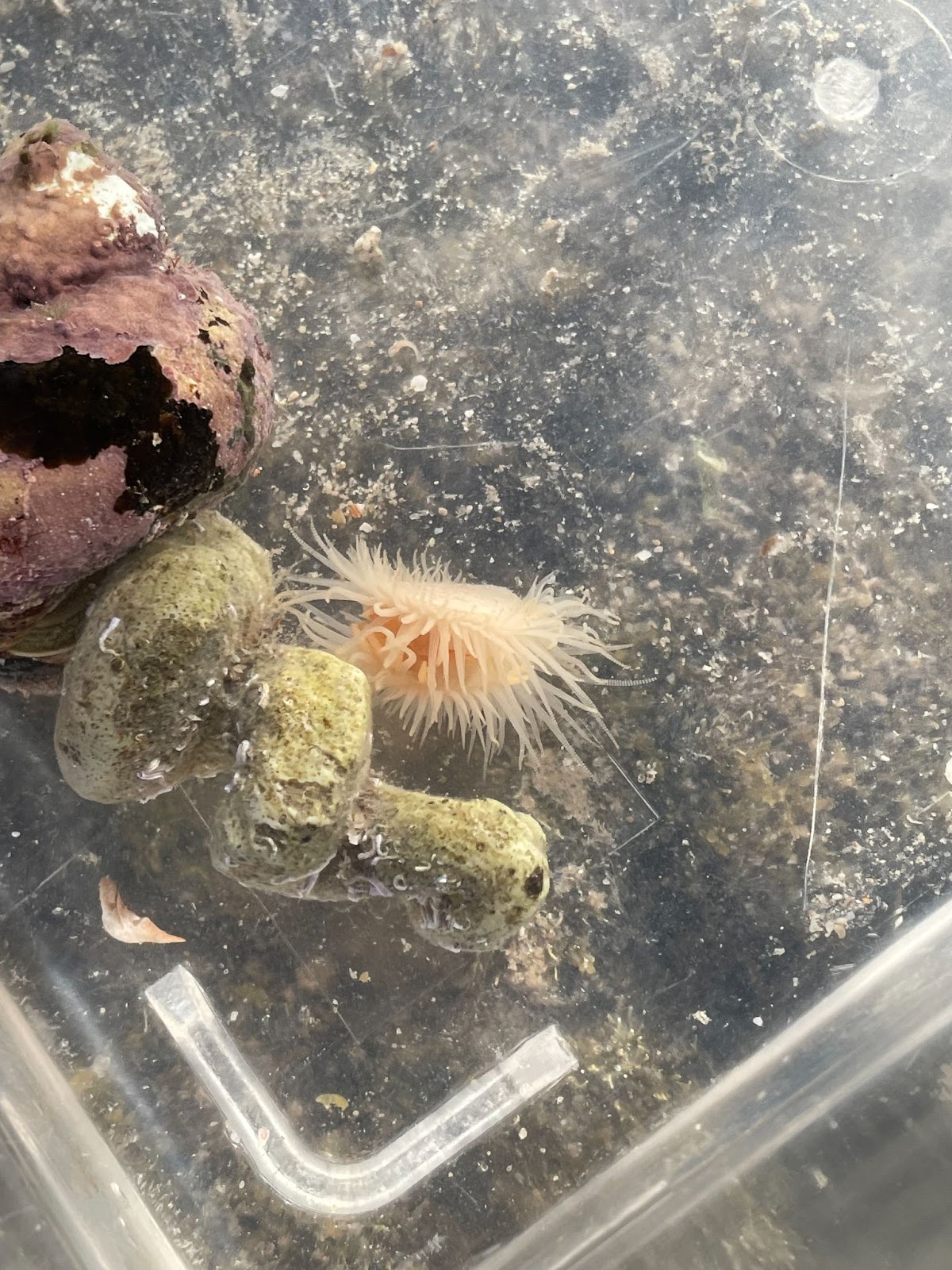
  While tide pooling on the beach next to CEDO one of my classmates found a fancy looking clam that I had never even heard of before. It looked like it had no shell and a lot of hair like structures extending out around the edges of its opening. These structures are sticky tentacles that are used to filter feed. I didn’t know much about clams, and have definitely never seen a clam move around before. This clam has a small muscular foot that can help move it around as well as anchor onto objects.  This is definitely the prettiest and most unique clam that I have ever seen! -Amber:)

Estuary Kayaking

Image
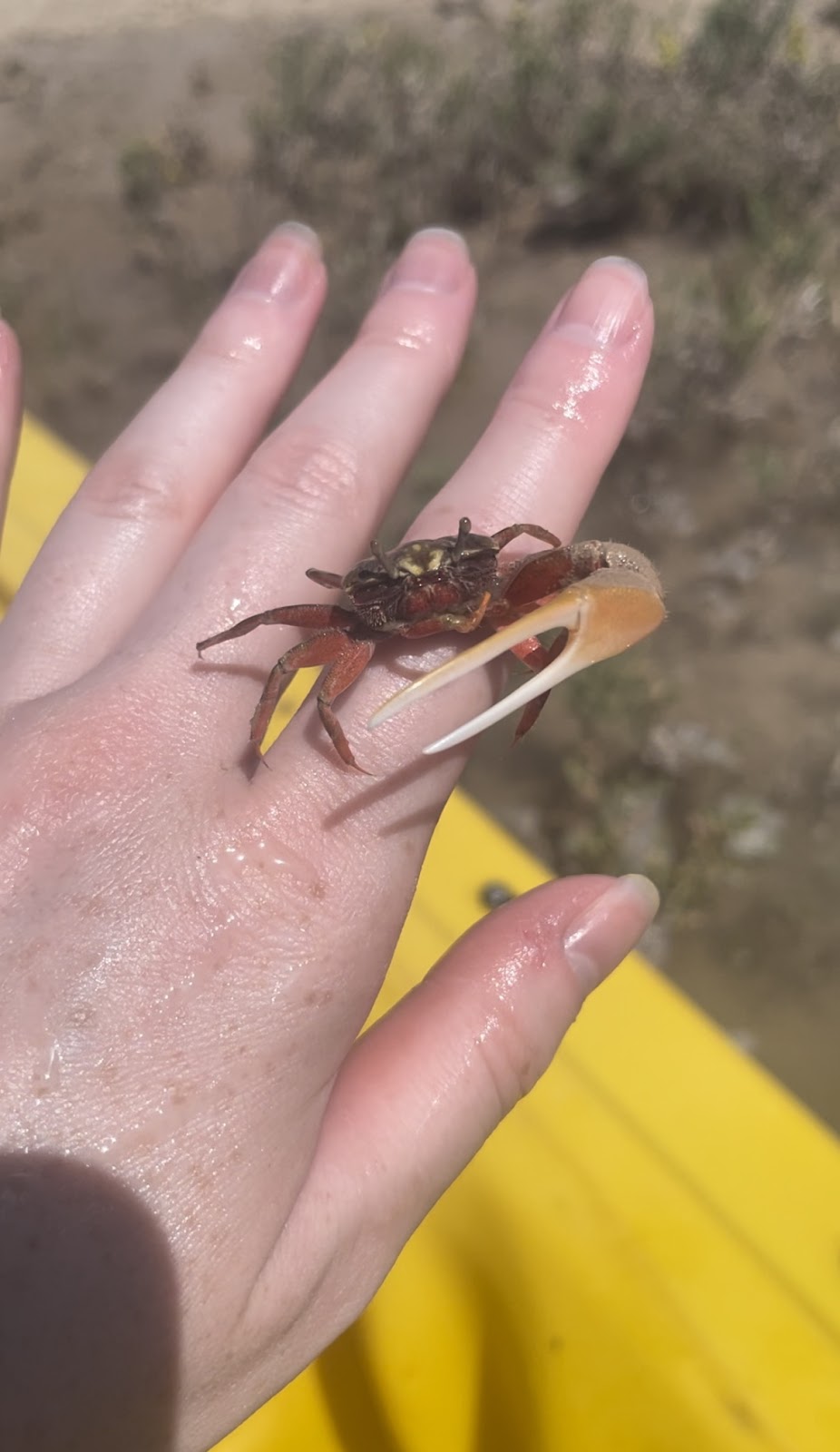
  Today we went kayaking in the Morua estuary in Puerto Peñasco. Some of us had never kayaked before so it was a new experience. Learning to kayak wasn’t as difficult as I thought, and I’m very proud of myself for not falling into the water! An estuary is a body of water that is partially enclosed by land. This is an important area for animals to use to breed and hatch their young. The water is brackish, which means that it is salt water, but the salt water from the ocean is mixed with freshwater from a river that is flowing into it. We learned that this particular estuary that we were in no longer had the freshwater from the river flowing into it. The CEDO biologist told us that the river water dried up about 15 years ago and now the estuary has a very high salinity. The average salinity of the ocean is 35, while this particular estuary had a salinity of about 80.  We stopped in the marshy part of the estuary and there were fiddler crabs EVERYWHERE on the shores. Fiddler crab...